Watch the Full Video Created by UC Davis CLEAR Center
For generations, pork producers have known that a successful operation requires a 365-day-a-year commitment to animal husbandry. But in Henry County, Illinois, a region with a rich heritage as a top swine-producing area, local producer Gary Asay is proving that the key to long-term success lies in managing another type of herd.
“I’m still raising livestock,” Gary says. “But my livestock is in the soil instead of above ground. I’m raising the livestock underneath the soil.”
By pairing modern swine production with conservation practices like no-till and cover crops, Gary has increased soil organic matter, reduced commercial fertilizer costs and nearly eliminated soil compaction—all while turning swine manure into one of his farm’s most valuable resources.
Pigs: Part of the Sustainability Solution
Gary’s journey began farming alongside his father, raising pigs in individual huts in outdoor hog pastures. It was labor-intensive work that required building fences and rotating pastures. When market demands shifted toward leaner pork, producers realized it was more difficult to raise leaner hogs outside. They started transitioning to modern buildings where they could raise pigs more efficiently.
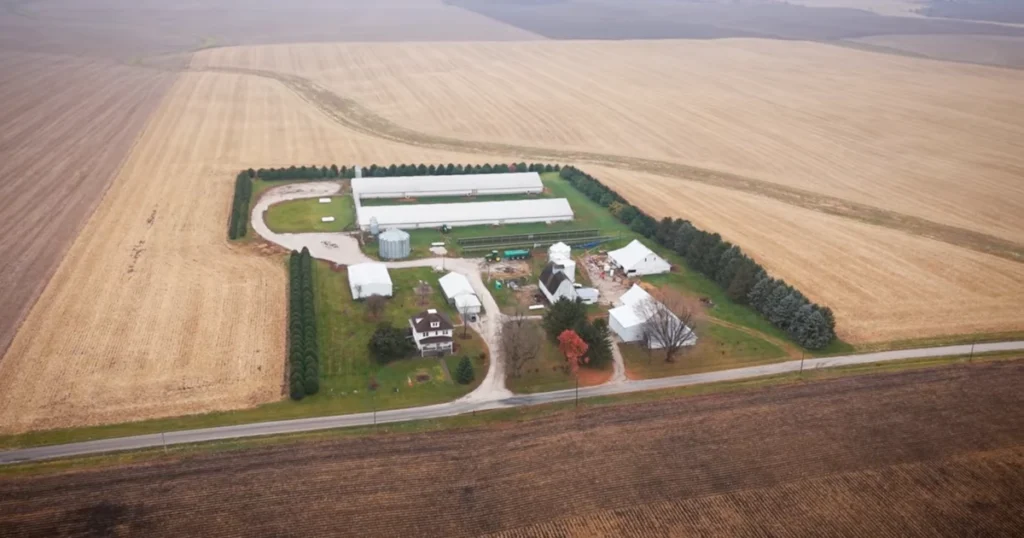
Today, the two modern barns on the operation feature 8-foot-deep pits underneath them, which store a full year’s worth of manure until it is pumped out and applied in the fall. For Gary, the manure is not a waste product to be disposed of; it is the financial engine of his entire grain operation.
Ditching the Plow: Protecting the Soil
Traditional tillage has long been used to loosen up the soil for planting, but it comes at a steep price. Gary cautions that the physical stirring of the soil exposes it to erosion, moisture loss and general degradation, all while racking up high costs in fuel, labor and machinery wear.
To fight soil erosion and build soil health, Gary committed to leaving his fields undisturbed. “In the long term, it’s the best way to manage that soil. Basically, you leave the soil untouched,” he says. Gary has successfully practiced continuous no-till on his fields for approximately 15 to 20 years.
To protect the soil even further, Gary pairs no-till with a robust cover crop strategy. He plants a multi-species cover crop mix, consisting of winter wheat, winter barley, spring oats and camelina, in early October immediately following his cash crop harvest.
By keeping living roots in the soil over the winter, Gary’s cover crops hold valuable nutrients in place, naturally suppress weeds and ensure his fields come back green and active every spring.
Measuring Improvements in Soil Health
The long-term combination of swine manure, continuous no-till and diverse cover crops has completely transformed Gary’s soil structure. Since he began farming this land, soil tests have shown a dramatic increase in organic matter, an indicator of healthier soil that stores more nutrients, improves water retention and supports long-term productivity.
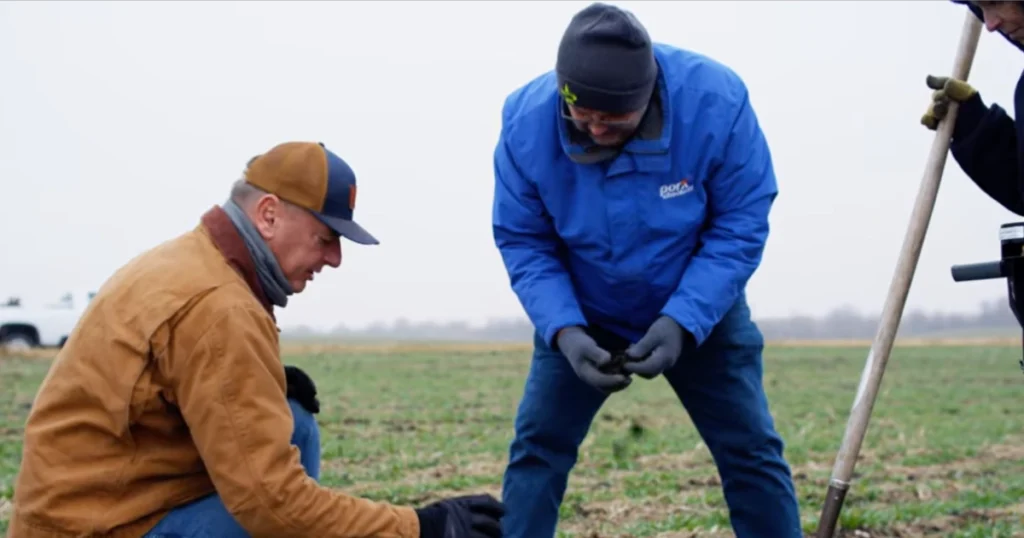
Rather than relying on steel tillage, Gary lets biology do the heavy lifting. “Earthworms are a very important part of that,” Gary explains. “They actually do our tillage for us. They cycle nutrients. They move up and down in the soil.”
Gary’s soil health journey did not happen through one major change. It developed over time as he tested new practices, measured the results and adjusted his management.
“If you never get out of your comfort zone, you never go anywhere,” he said. “You have to go out there and try practices. You fine-tune your management as you go along.”
Connecting Livestock and Crops to Build Productivity
For Gary, sustainability means producing food today while maintaining and improving the resources future farmers will need.
“Sustainability is raising food now that maintains the ability of future generations to raise food,” he said. “What I do is regenerative agriculture, and to me that is farming and raising food now in a way that improves the soil and the ability to grow crops in the future.”
By connecting pork production, responsible manure management and soil conservation, Gary is helping demonstrate how livestock and crop agriculture can work together to build a more productive and resilient future.


