Steiner and Company produces the Profit Maximizer report on behalf of National Pork Board based on information we believe is accurate and reliable. However neither NPB nor Steiner and Company warrants or guarantees the accuracy of or accepts any liability for the data, opinions or recommendations expressed.
Highlights
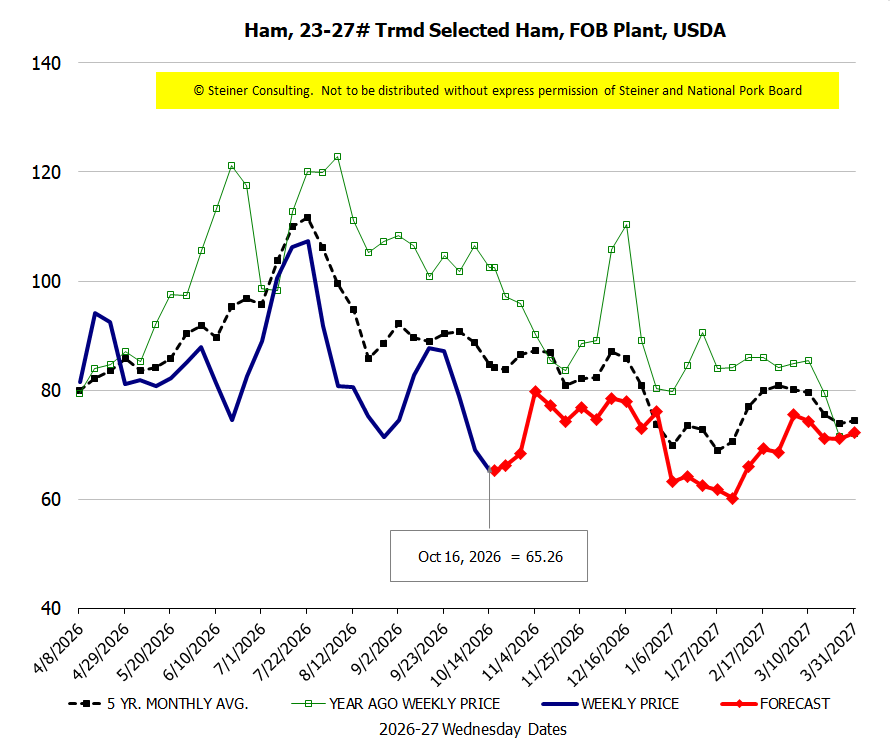
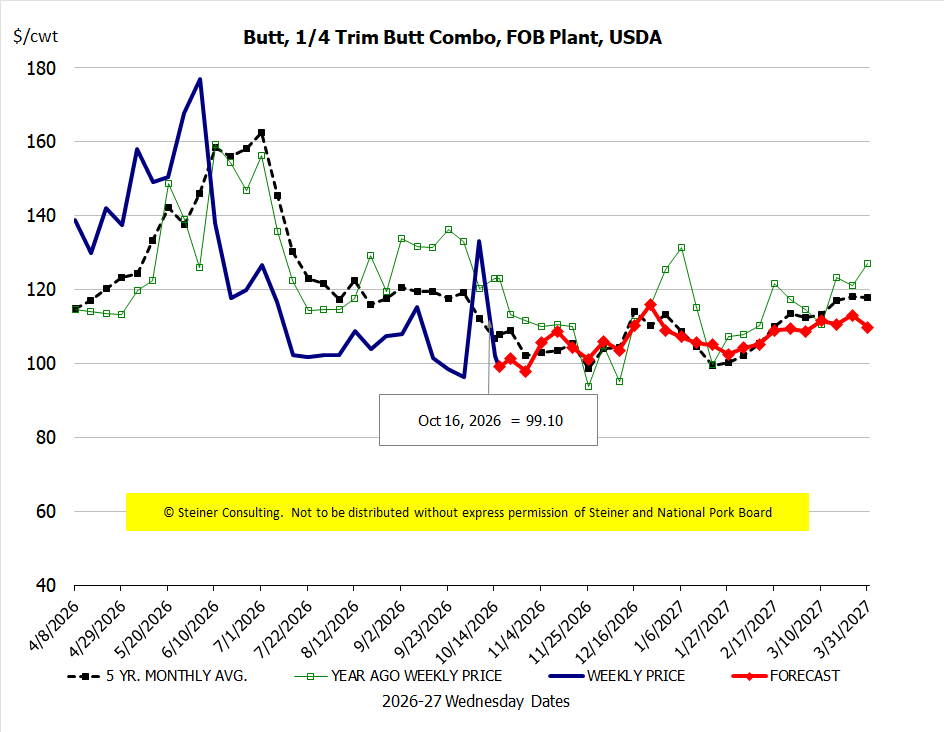
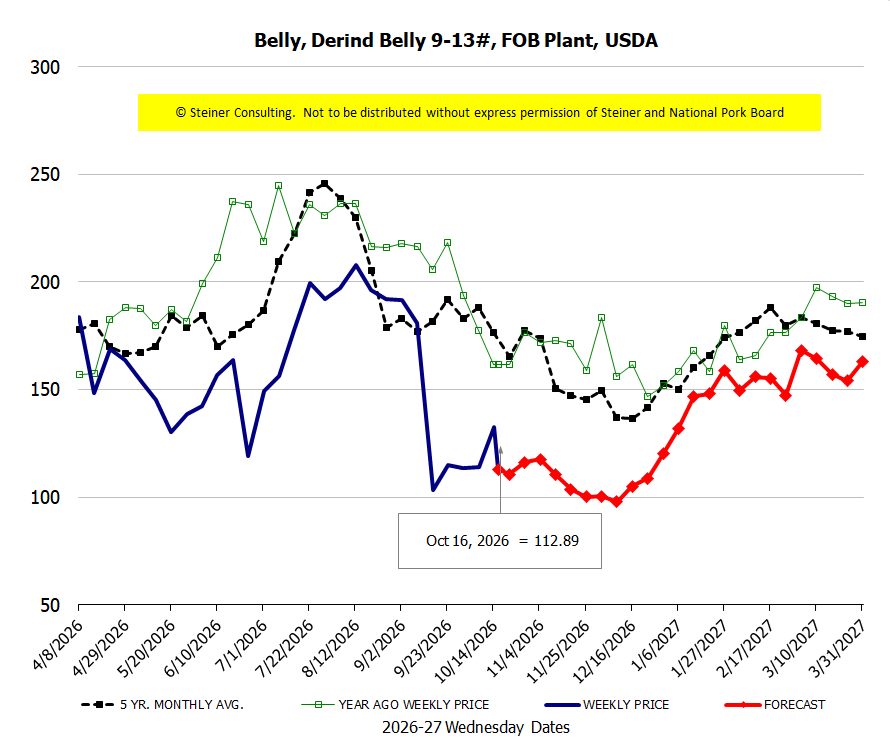
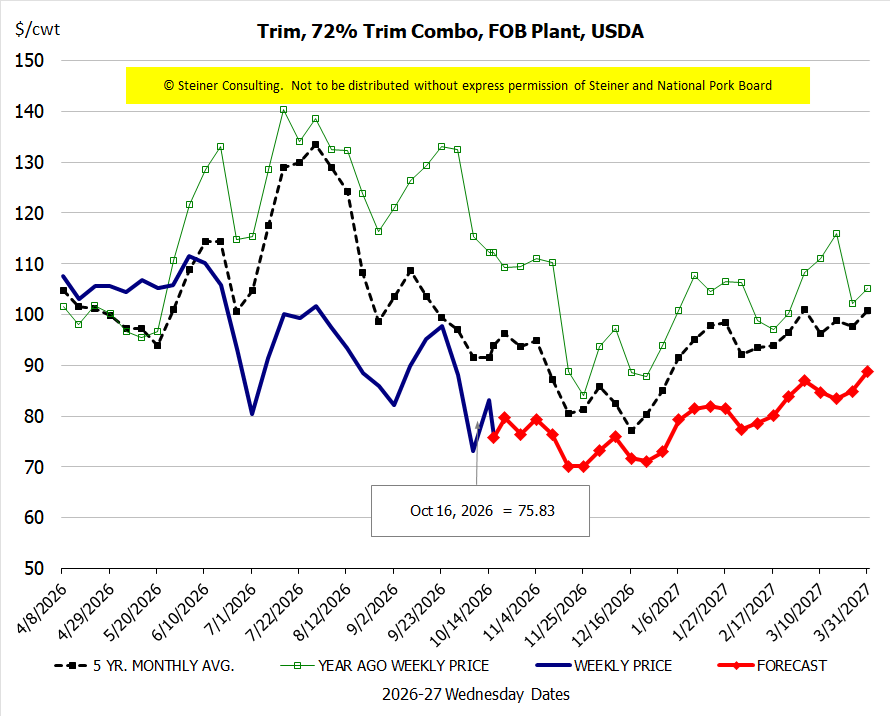
- Pork prices have been in freefall in the last few weeks on a combination of seasonally increasing supplies, weak demand in all aspects of the business, and inability/unwillingness of processors to add to their inventory positions.
- On the later point, for many end users it is not feasible to build inventories given shelf life concerns, high cost of money and uncertainty about demand next spring.
- The current market does provide some of the best opportunities in years to get needs covered, evidenced last week when over 42,000 MT was sold to export customers. The adage that low prices fix low prices is certainly appropriate.
- While retail prices have been weaker than expected, weakness in hams, bellies and picnics remains the main drag for prices. Slowdown in foodservice sales particularly stands out in our view.
Full Report
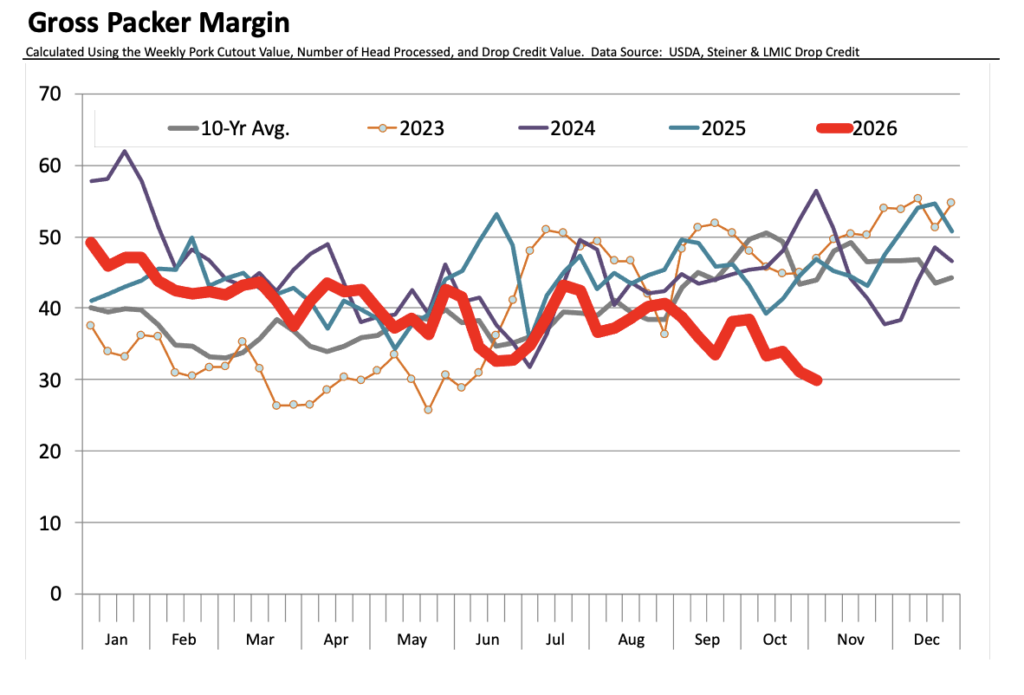
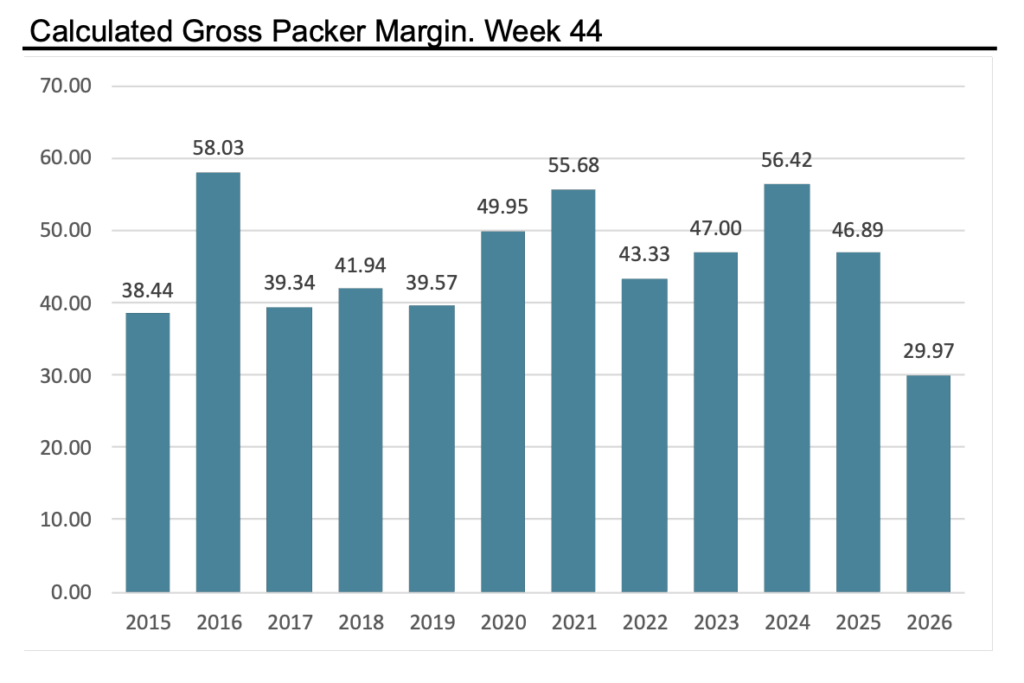
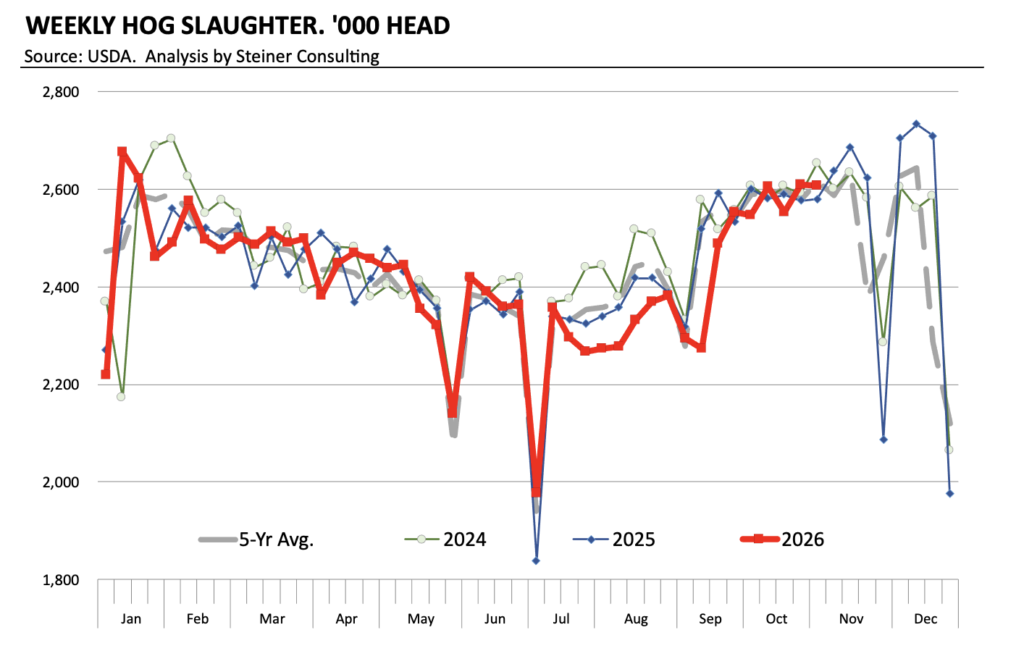
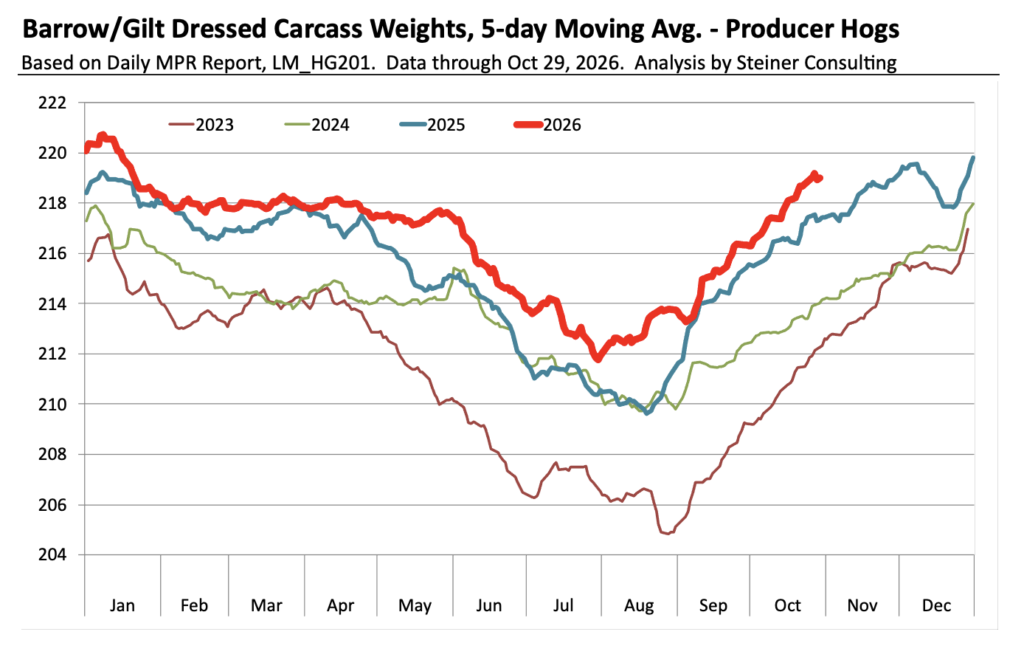
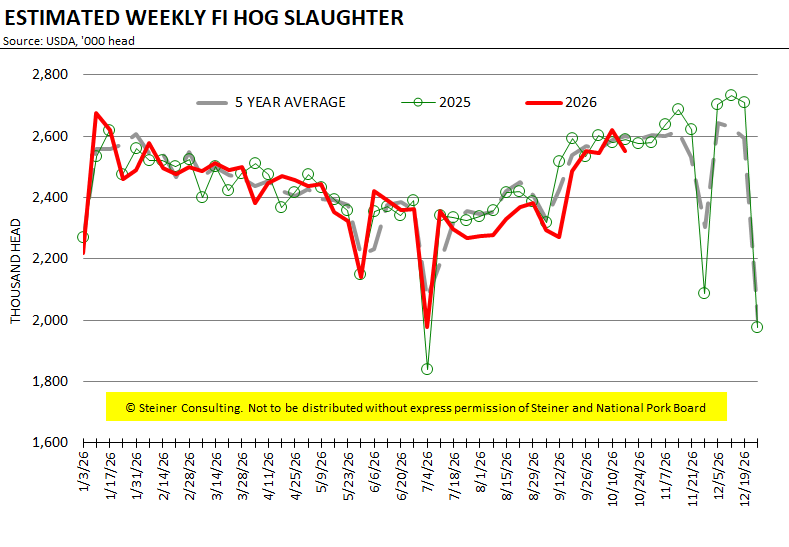
Pork packer margins were pressured further this week and that does not bode well for the CME index, at least in the near term. Our calculation of a gross packer margin (what packers receive for wholesale pork and byproducts minus what they pay for hogs) last week was around $30/head, $5 less than the previous week. Current margin is 17% lower than a year ago and the lowest it has been in over 10 years. That’s in nominal dollars. When adjusted for inflation current margin is probably the lowest for this time of year since 2008. There is no clean way to calculate margins given the level of vertical integration and the various ways in which hogs are priced. So rather than focusing on the absolute value, the charts below are more useful for looking at the trend. Usually packer margins get a boost in Q4 as hog supplies increase and packers gain leverage in negotiating hog prices. However, persistent weakness in the cutout has created significant headwinds for packers. This will have a twofold impact. In the current environment packers are likely to slow down the pace of slaughter, resulting in ever increasing weights for hogs, especially producer owned hogs. USDA has been revising lower its slaughter estimates as fewer actual hogs were processed than earlier estimated.
Over the years, the cutout has become increasingly important in determining the value of the CME Index, but negotiated cash hog prices remain significant, even if their full impact is not immediately apparent. Last week, USDA reported that 21,138 hogs were sold by producers on a negotiated basis out of 1.27 million producer-owned hogs reported into the MPR system (packer owned hogs were another 1.15 million). The negotiated trade was just 1.7% of the producer owned total. USDA also reported that 706,337 hogs were priced using swine or pork market formulas, some of which are tied to negotiated cash hog prices. Since we don’t know the exact share, we can estimate the impact of negotiated cash prices using a regression of the CME Index against cash hog prices and the pork cutout. Using daily data for the last 12 months, we found that a $10 change in the cash hog price was associated with a $3.50 change in the index, while a $10 change in the cutout was associated with a $4.80 change. The regression explained 92% of the variation in the calculated one-day CME Index. Pricing lags and differences in formula arrangements likely account for some of the unexplained variation. The goal was not to replicate the index calculation but to evaluate how sensitive it is to the two benchmarks.
Impact of cash hogs over the CME index has faded a bit over time but remains significant. The seasonal increase in hog supplies and carcass weights is likely to increase competition for shackle space. With packer margins already compressed, cash hog bids are likely to remain under pressure. In September we noted how cash hog values were starting to trend as they did in 2023, a year producers would like to forget. That year cash hog prices declined into the mid-$40s by December (see chart). December lean hog futures are currently trading at $59/cwt, $7/cwt lower than current levels. That may appear to be a steep discount until you consider that if cash hog values drop to the low 40s (which is where they are trading) that alone can shave $7-8 from the value of the index. And that assumes a steady cutout.
Price risk for hog prices is skewed to the downside in the near term. We have revised our forecasts lower through Q1. The expectation is that aggressive pricing will eventually get packers cleaned up. What is less clear is whether there has been a more persistent shift in demand, one that would require further supply adjustments on the part of producers.
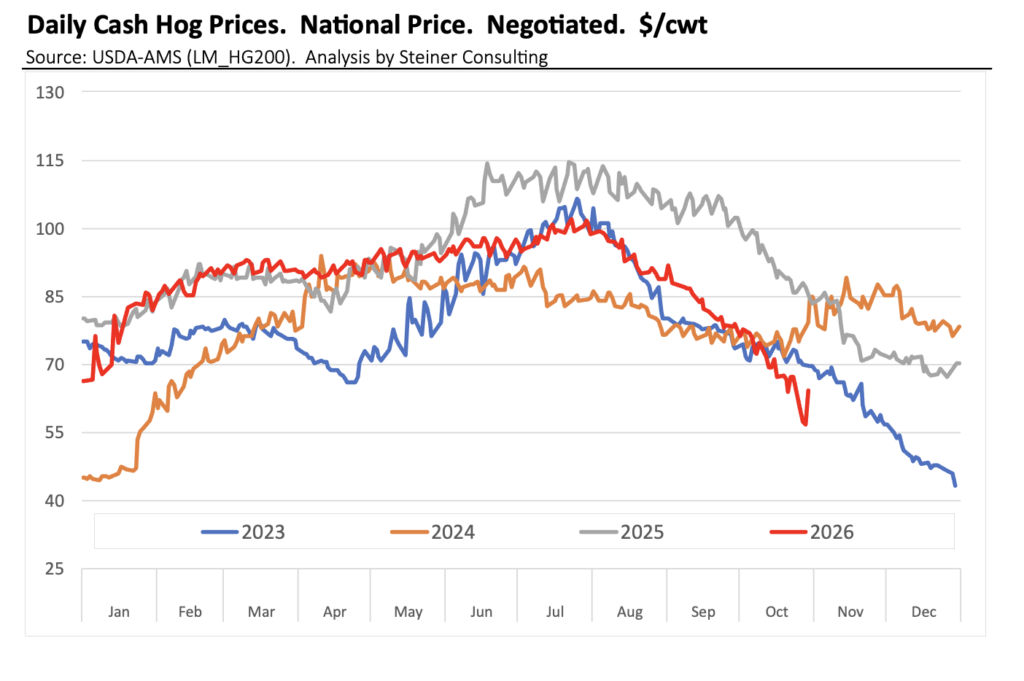
Price Chart
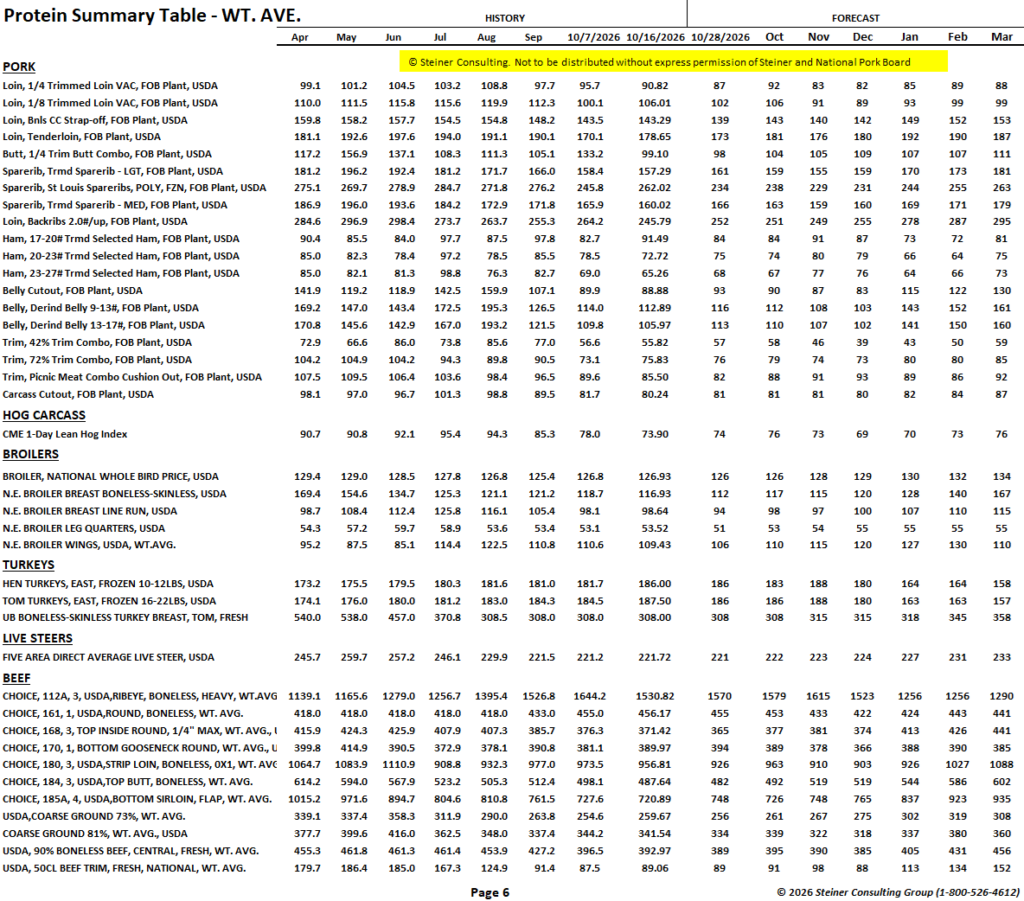
Forcasts
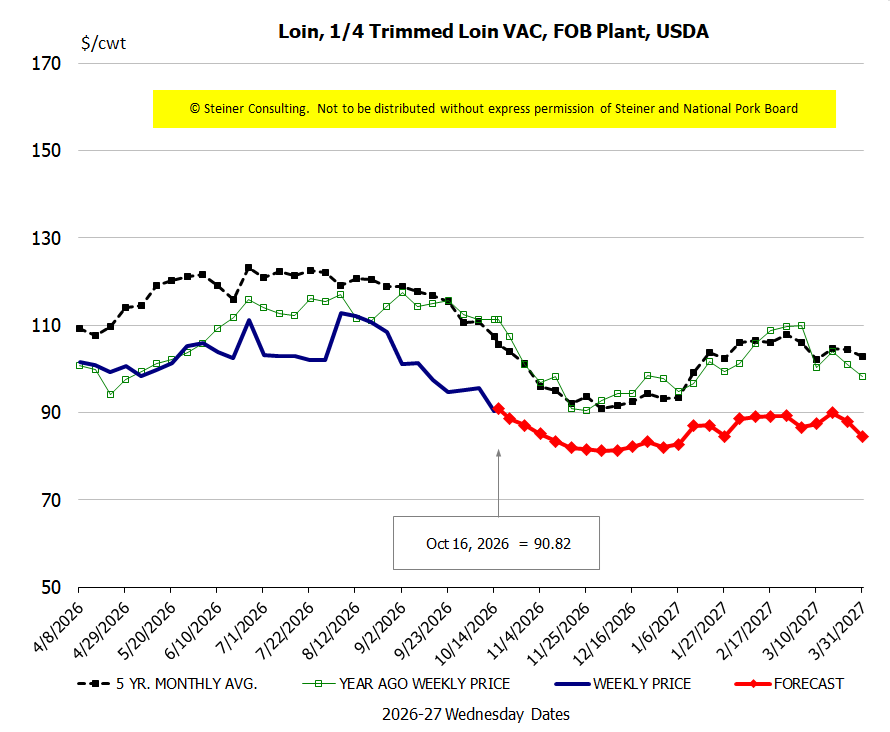
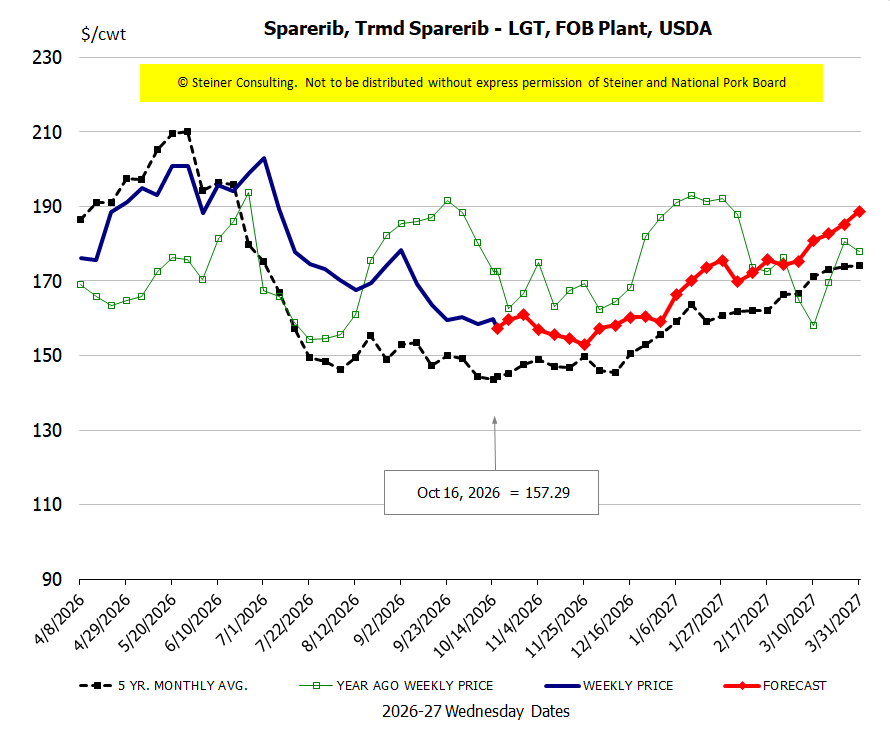
Steiner Consulting Group produces the National Pork Board newsletter based on information we believe is accurate and reliable. However, neither NPB nor Steiner and Company warrants or guarantees the accuracy of or accepts any liability for the data, opinions or recommendations expressed.


